Showing posts with label Swedish-speaking Finns. Show all posts

Tuesday, 28 July 2009

PISA Results for 2003: Scores for Swedish-Speakers

For the 2003 PISA survey, the Finnish PISA team incorporated all of the Swedish-speaking schools in the PISA sample.  

They published the findings with a separate score for the Swedish-speakers.  

Here are the scores for the 2003 survey:

Photobucket

Photobucket

Photobucket

Photobucket
Therefore, the 2003 PISA data shows that Swedish speakers score lower than Finnish speakers.  The blue bar in the graph shows the average scores of all participants in Finland, not just Finnish speakers.  

Education for Swedish-Speaking Finns: Part Five

More recently, these events have happened:
  • Resettlement of Finnish refugees
  • Post-War reconstruction
  • Increased Finnish economic power
  • Finnish nationalism
These events have led to intermarriage between the two language groups, lessening the stronghold of the Swede-Finn identity.

Although the percentage of Swedish-speakers has remained constant over the years, their percentage in the overall Finnish population has decreased.

Language shifting occurred, and Finnish became the language of the labor market.  

Swedish-speakers also emigrate to Sweden, further decreasing their percentage in the Finnish population.  

In 1977, Paulston stated, "The Swede-Finns continue to surpass national education norms, and especially those SF [Swedish-speaking] youth who live in towns and regional urban centers ... The continuing high priority of urban Swede-Finns on formal schooling is apparent." 

Education for Swedish-Speaking Finns: Part Four

Between 1880 and 1881, Swedish-speaking students numbered 1,764 while the total of Finnish-speaking students came only to 786.  In 1908-1909, however, the Swede-Finn numbers remained constant at 1,771 while the number of Finnish students grew to 4,756.  

During the 1920s and 1930s, Finnish-speaking university students battled for the "Finnification" of the University of Helsinki.  The prevalence of Swedish-speaking professors and Swedish as the language of instruction placed a great onus on the Finnish speakers.  

The large number of Swedish schools and large size of the Swedish-speaking upper class encouraged an "overproduction" of Swedish-speaking university students in comparison to the size of the Swede-Finn population (Paulson, 1977).  Today, the University of Helsinki still has a quota for Swedish-speaking students and professors, and Abo Akademi in Turku caters only to Swedish speakers.  

The separate education for Swede-Finns reflects the mutual acknowledgment of the difference between both linguistic groups.  

Education for Swedish-Speaking Finns: Part Three

With Finnish independence came official bilingualism, and with this, the Swedish-speaking Finns pursued a policy of cultural autonomy and separatism.  Along with this came separate Swedish-speaking schools.  
The Constitution of Finland clearly defines the rights of education in the Swedish language.  In Section 17, the Constitution confirms the two national languages of Finland, and asserts the right to use the mother tongue in official capacities, such as courts of law and government documents. It also affirms the provision for cultural and societal necessities, on an equal basis, in the mother tongue.  

In 1920, with the founding of the Swedish Department in the Central Bureau of Schools, both Swedish schools and Finnish schools held, legally, an equal position.  

This advantageous minority position does not find  a parallel with the Finnish-speaking minority in Sweden.  

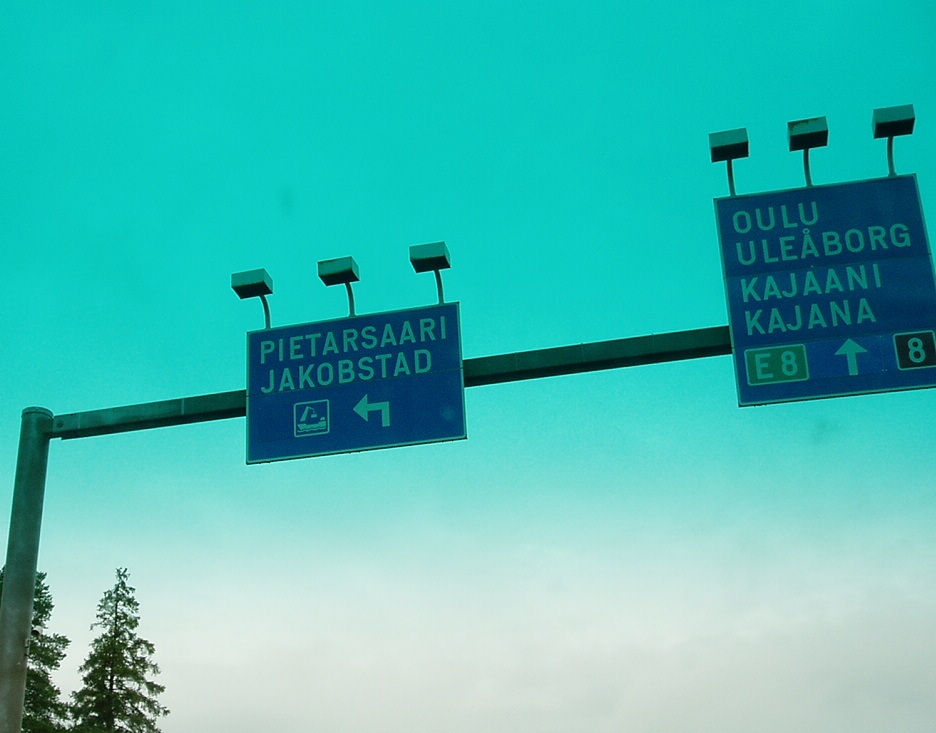
Click here and here and here for pictures of signs in both the Finnish and Swedish languages.  

Click here for a map of Finland showing the Swedish-speaking areas.  

Education for Swedish-Speaking Finns: Part Two

In response to the Finnish nationalist movement in the mid-19th century, the Swedish-speakers started their own counter movement, but only in the interests of the upper classes.  The common Swedish-speakers did not have a part in this movement.  Many viewed the Finnish language as the language of peasants and felt superior to Finnish speakers.  

In 1906, Swede-Finns founded the Swedish People's Party in order to unite the entire Swedish-speaking population in Finland, irrespective of social class.  

The uniting of Swede-Finns supports their view that Finland, much like Switzerland or Belgium, has a culturally and linguistically pluralistic society, and that both nationalities and linguistic groups have existed side-by-side throughout Finland's history.  

Education for Swedish-Speaking Finns: Part One

Swedish-speaking Finns, called finlandssvenskar in Swedish and suomenruotsalaiset in Finnish, hold a unique place in Finnish society.  
The Swede-Finns constitute a "declining cultural, economic, and social elite [which] has sought to maintain ethnic identity boundaries through control of a separate Swedish-speaking school system and widespread non-formal educational efforts" (Paulston, 1977).  

According to Paulston, separate schooling allowed the Swede-Finns to maintain the survival of their minority group.  Although a minority, Swedish-speaking Finns had an atypical role compared to other ethnic minorities.  They constituted a high percentage of the economic and social elite of Finland, with "superior resources, historical dominance, and psychological advantage" (Paulston, 1977).